In the shadowy realm between dreams and reality, there lurks a creature both feared and revered across the storied landscapes of Japanese mythology. Known as the Baku, this enigmatic entity is believed to possess the power to consume nightmares, offering respite to those tormented by their nocturnal visions. Yet the Baku is more than just a supernatural remedy for bad dreams; it embodies a complex tapestry of cultural symbolism, historical depth, and mythological intrigue. As you journey through the cultural corridors of Japan’s mythic past, you will discover how the Baku has woven itself into the fabric of legend and modern imagination.
Origins of Baku
Historical Background
The roots of the Baku stretch back to ancient China, where it was initially conceived in myth and slowly migrated into the collective folklore of Japan. Originally depicted as a chimera-like creature in Chinese lore, the Baku was said to be composed of various parts of different animals — a motif that captured the imaginations of early storytellers. Historical texts such as the “Shanhaijing” or “Classic of Mountains and Seas” provide cryptic references to a beast that consumed dreams, setting the groundwork for its eventual Japanese adaptation.
During the cultural exchange between China and Japan in the Asuka and Nara periods (approximately 538-794 AD), the concept of the Baku traveled across the seas, adapting to new cultural contexts. The creature’s narrative evolved within the framework of Japanese Buddhism and Shinto beliefs, gaining attributes that distinguished it from its Chinese origins. In particular, the Baku became associated with Buddhist practices aiming to protect against evil spirits and ward off misfortune, cementing its place within Japanese spiritual life.
As centuries passed, the Baku’s role became even more entrenched in Japanese culture, with references appearing in a variety of manuscripts and temple engravings. By the Edo period (1603-1868), the creature had firmly established itself as a benevolent entity within Japanese folklore, often invoked during times of unease and uncertainty. This historical journey from Chinese mythical beast to a staple of Japanese lore underscores the dynamic evolution of myth across cultural boundaries.
Mythological Significance
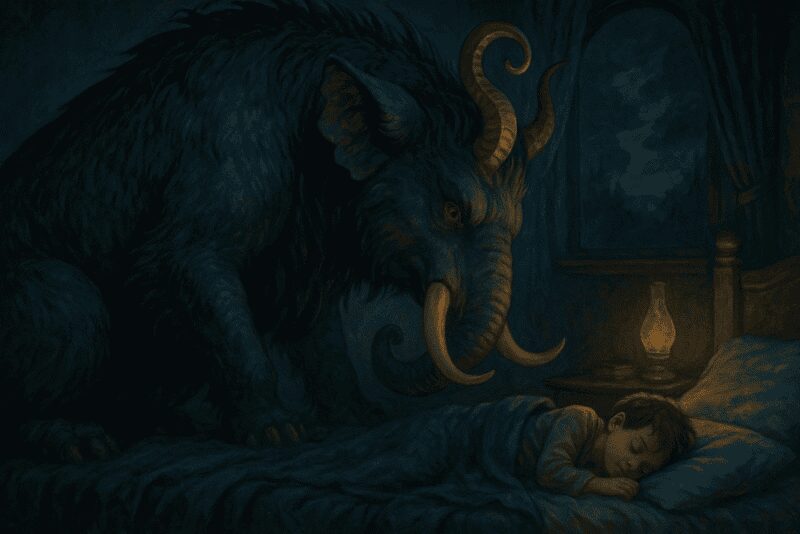
In Japanese mythology, the Baku is revered not merely as a creature of the night but as a divine intervenor that stands between the mortal realm and the spiritual world. By consuming nightmares, the Baku serves a sacred function — it restores spiritual harmony and offers protection against the chaos of the subconscious. This role ties it closely to the concept of Yōkai, supernatural entities that can embody forces of nature, illness, or fortune.
The Baku’s significance is further amplified by its connection to the Buddhist concept of “Makurakotoba” or “pillow words,” which are incantations uttered before sleep to ward off bad dreams. By calling upon the Baku’s name before resting one’s head, individuals believed they could summon this benevolent beast to devour their nightmares. This practice highlights the Baku’s role as a guardian of the night, bridging the gap between human vulnerability and spiritual protection.
Moreover, the Baku’s mythological importance is interwoven with the idea of balance — a creature that consumes negativity to preserve peace and well-being. This aligns with broader themes in Japanese philosophy, where harmony and equilibrium are paramount. Thus, the Baku becomes a symbol not only of supernatural intervention but also of a cultural aspiration for balance in all aspects of life.
Description of Baku
Physical Characteristics
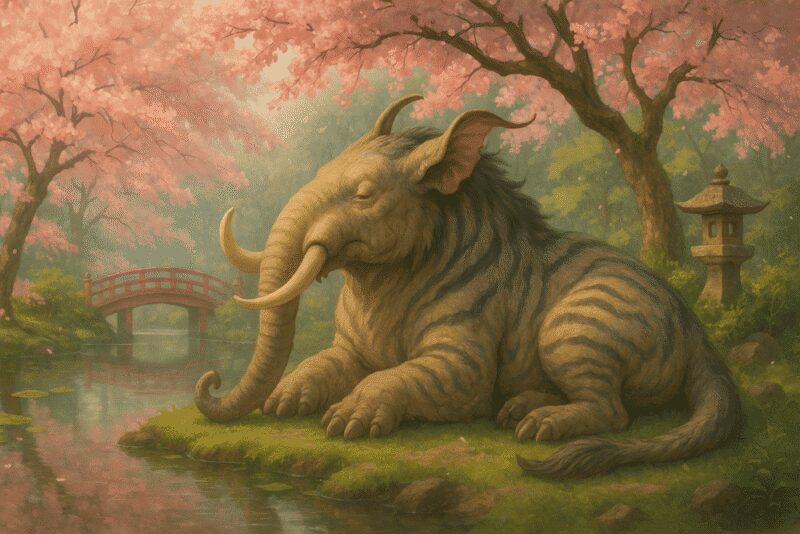
The Baku is often described as a composite creature, featuring elements from various animals, each chosen for its symbolic significance. This eclectic physicality is central to its mythic persona. Common depictions describe the Baku as having the trunk and tusks of an elephant, the eyes of a rhinoceros, the paws of a tiger, the tail of an ox, and sometimes even the body of a bear. This amalgamation of animal traits represents the Baku’s otherworldly origins and its unique position within the pantheon of mythical creatures.
The Baku’s elephantine trunk, in particular, is a key feature that underscores its ability to “suck” away nightmares, much like an elephant uses its trunk to gather nourishment. Meanwhile, the tiger’s paws symbolize strength and courage, attributes that enable the Baku to stand guard against the dangers lurking in the shadowy realm of dreams. The ox’s tail might imply steadfastness and determination, perhaps indicating the creature’s relentless nature in its pursuit of nightmares.
Artistic representations of the Baku vary widely, with some illustrations emphasizing its more fantastical elements, while others portray it as a more subdued, approachable entity. Regardless of its specific appearance, the Baku’s composite form is vital to its identity, encapsulating its ability to transcend the ordinary and interact with the mysterious domain of dreams.
Behavioral Traits
While physically imposing, the Baku is characterized by its gentle and benevolent nature, a trait that sets it apart from many other supernatural entities in Japanese folklore. Its primary behavior is the consumption of nightmares, an act performed not out of malevolence but from a desire to aid and protect humans from the ravages of their own minds. This places the Baku in stark contrast to other creatures of folklore, which often thrive on fear or chaos.
The Baku is typically summoned with intention, called upon by those who are plagued by bad dreams. In such instances, the individual may utter a specific incantation or prayer, inviting the Baku to partake in the feast of nightmares. This invitation underscores the mutual relationship between humans and the Baku: an understanding that the creature will not impose itself unless requested, highlighting its respectful and non-intrusive nature.
Beyond its dream-eating role, the Baku is said to possess a keen sense of justice and morality, often depicted as a protector of righteousness. It is believed that the Baku can distinguish between genuine nightmares and mere figments of the imagination, only consuming those dreams that truly disturb the dreamer’s peace. This discriminating nature further enhances its reputation as a wise and discerning spirit, trusted by those it serves.
Baku in Culture and Tradition
Role in Folklore
Throughout Japanese folklore, the Baku maintains a pivotal role as a guardian of dreams, often invoked in stories and rituals centered around sleep and protection from evil spirits. Tales of the Baku are commonly shared among families, passed down through generations as comforting anecdotes for children and adults alike who may fear the night. The creature is often portrayed as a noble defender against the terrors that lurk in the subconscious, providing solace to those troubled by their dreams.
In traditional practices, the invocation of the Baku is a ritualistic affair, imbued with the hope and faith that the creature will heed the call and perform its protective duties. This ritual might involve the recitation of specific phrases or the placement of talismans bearing the Baku’s likeness near one’s bed. Such practices reinforce the cultural belief in the Baku’s power, integrating it into the everyday lives of those seeking its aid.
Moreover, the Baku’s presence in folklore serves as a moral compass, illustrating the values of compassion, strength, and vigilance. The stories often underscore the idea that while nightmares are natural, they can be overcome with the help of benevolent forces. This narrative not only reassures individuals but also instills a sense of agency, suggesting that by invoking the right entities, humans can exert some control over their dreamscapes.
Regional Variations
Across Japan, the depiction and understanding of the Baku can vary significantly, reflecting regional differences in cultural practices and belief systems. In some areas, the Baku might be portrayed as a more tangible, almost corporeal being, while in others, it might be seen as a purely ethereal presence, existing solely in the realm of dreams. These variations often depend on local folklore and the specific influences of regional religious practices.
For instance, in certain parts of Japan, the Baku might be more closely associated with Buddhist rituals, often depicted alongside other guardian deities believed to protect against spiritual disturbances. In contrast, in regions with a stronger Shinto influence, the Baku might be depicted as a kami, or spirit, that embodies a natural phenomenon, such as the night itself or the transition between consciousness and sleep.
These regional differences enrich the tapestry of Japan’s mythological landscape, showcasing how a single mythical entity can be interpreted in myriad ways, yet still retain its core identity and function. The Baku’s ability to adapt and manifest differently across regions speaks to its enduring relevance and the deep cultural resonance it holds for the Japanese people.
Legends and Tales
Famous Encounters
One of the most renowned tales of the Baku involves a young samurai who was plagued by horrific nightmares each night. Despite his bravery in battle, the visions he faced in his dreams left him terrified. According to the legend, his concern grew so great that he sought counsel from a wise monk, who advised him to pray to the Baku for assistance. The samurai followed this guidance, and one evening, as he lay down to sleep, he recited the prayer calling upon the Baku. That night, the Baku appeared in the samurai’s dream, consuming his nightmares with its formidable trunk. From then on, the young warrior slept peacefully, his courage restored in the waking world.
Another tale tells of a village tormented by a series of collective nightmares, believed to be the result of a malevolent spirit haunting the area. The villagers, desperate for relief, crafted a statue of the Baku from local cedar wood, placing it at the village’s entrance. Night after night, they gathered in prayer, beseeching the Baku to intervene. Over time, the nightmares ceased, and the villagers credited the Baku’s intervention for bringing back peace to their community. The wooden statue stood as a testament to the Baku’s protective influence, becoming a cherished symbol of hope and resilience.
These stories demonstrate the Baku’s role as a hero of sorts within Japanese folklore, acting not just on personal levels but also intervening in communal crises. Through these narratives, the Baku emerges as an emblem of trust and security, highlighting its pivotal place in the cultural psyche as a savior from the fears that haunt human consciousness.
Symbolism and Meaning
The symbolism of the Baku is deeply intertwined with themes of protection, purification, and the quest for inner peace. By consuming nightmares, the Baku not only alleviates immediate fears but also purifies the soul, allowing individuals to awaken refreshed and unburdened. This act of cleansing aligns with broader spiritual practices in Japan, where purification rituals are fundamental to both Shinto and Buddhist traditions.
The Baku also represents the power of belief and the human capacity to influence one’s experiences through faith and ritual. The idea that invoking the Baku can change one’s dreamscape speaks to a deeper cultural understanding of the mind’s influence over reality. This concept resonates within many aspects of Japanese philosophy, where mental discipline and self-awareness are highly valued.
Furthermore, the Baku serves as a metaphor for the dual nature of dreams, embodying both the potential for terror and the possibility for liberation. It highlights the delicate balance between the conscious and subconscious realms, serving as a reminder of the complexities and mysteries inherent in the human psyche. Through its mythos, the Baku encourages introspection, urging individuals to confront their fears and find harmony within themselves.
Baku in Modern Times
Literature and Media
In contemporary literature and media, the Baku continues to capture the imagination of creators, appearing in various forms across different platforms. In Neil Gaiman’s popular graphic novel series “The Sandman,” for example, a character inspired by the Baku appears as a benevolent dream-eater, showcasing the creature’s enduring appeal in Western contexts. Similarly, the Baku has been featured in Japanese animation and manga, such as “InuYasha,” where it is portrayed as a benign spirit with the power to manipulate dreams.
The Baku’s influence extends into the world of video games as well. In the “Pokémon” franchise, the creature Munna, and its evolved form Musharna, are derived from the Baku, with abilities centered around dreams and sleep. These characters introduce the mythology to a global audience, blending traditional folklore with modern entertainment.
The literary and media depictions of the Baku not only preserve its mythological roots but also allow for creative reinterpretations, ensuring that the creature remains relevant in an ever-evolving cultural landscape. By appearing in these contemporary formats, the Baku continues to symbolize the mysterious allure of dreams and the timeless quest to master them.
Contemporary Relevance
Today, the Baku remains a figure of intrigue and relevance, particularly as interest in global mythologies grows within academic and popular circles. It offers insights into the universal human experience of dreams and nightmares, resonating with individuals who seek understanding and reprieve from their subconscious fears. The Baku’s role in addressing the intangible yet profound impact of dreams positions it as a symbol of psychological exploration and healing.
The continued fascination with the Baku also reflects a broader cultural appreciation for myth and folklore as vehicles for expressing complex emotions and metaphysical concepts. In an era characterized by technological advancement and globalization, such mythical figures provide a means of connecting with the past, offering a sense of continuity and cultural identity.
As modern society grapples with the pressures of contemporary life, the Baku’s symbolism of protection and purification holds therapeutic significance, reminding people of the power of belief and the potential for transformation. Whether through literature, media, or personal practice, the Baku continues to inspire, providing a touchstone for navigating the enigmatic realms of dreams and self-discovery.
Conclusion
The Baku, with its roots in ancient myth and enduring presence in modern culture, serves as a testament to the power of folklore to transcend time and space. As a benevolent eater of nightmares, it offers both solace and insight, inviting you to explore the depths of your own subconscious with courage and curiosity. In a world where dreams continue to captivate and confound, the Baku stands as a guardian of the night, ready to consume your fears and guide you towards a peaceful slumber.