The Kitsune, a mystical creature from Japanese folklore, captivates the imagination with its ability to shape-shift and its myriad of supernatural powers. These enigmatic fox spirits are often seen as both benevolent and malevolent, embodying the duality of trickster and protector. As the veil between the human and spiritual worlds waxes and wanes, the Kitsune continues to enchant and perplex those who dare to delve into its legends. By exploring the origins, cultural significance, and modern interpretations of Kitsune, you can uncover the complex narrative that surrounds these legendary beings.
Origins of Kitsune
Historical Background
The origins of Kitsune can be traced back to ancient Japan, where foxes were both revered and feared. The earliest mentions of Kitsune appear in the “Nihon Shoki” and “Kojiki,” two of Japan’s oldest historical texts, dating back to the 8th century. In these texts, foxes were often linked with Inari, the deity of rice, fertility, and prosperity. Over time, the image of the Kitsune evolved, influenced by the introduction of Chinese fox mythology, which portrayed foxes as mystical beings capable of transforming into humans.
In the Heian period (794-1185), the perception of the Kitsune began to shift, embedding itself deeper into the cultural and religious fabric of society. As Buddhism spread through Japan, foxes were increasingly associated with demonic entities, leading to a more nuanced understanding of their nature. The evolving lore allowed the Kitsune to become a symbol of duality, capable of both benevolence and trickery. This perception was further reinforced by the literature and art of the time, which depicted Kitsune in various roles and settings.
As you journey through Japan’s history, you notice that the Kitsune’s image is not static but continuously molded by cultural exchanges and societal changes. From mystical pets of the aristocracy to symbols of deceit and danger, the Kitsune legend adapted to the shifting sands of time. This fluidity is what has allowed the Kitsune to remain a vital part of Japanese mythology, constantly reinterpreted by each generation.
Mythological Significance
The Kitsune holds a prominent place in Japanese mythology, serving as a bridge between the physical and spiritual realms. As messengers of Inari, Kitsune are thought to bring good fortune and prosperity to those who honor them, especially in agricultural communities. Their role as divine intermediaries has cemented their status as essential figures in Shinto practices, where they are often worshipped at shrines dedicated to Inari.
Beyond their divine associations, Kitsune are also seen as tricksters, echoing the role of the cunning fox found in other cultures. This dual nature emphasizes the Kitsune’s role as a moral arbiter, teaching humans valuable lessons through cunning and deceit. As shape-shifters, Kitsune transform into beautiful women or even human men, often testing the integrity and honesty of those they encounter. This aspect of their mythology highlights the complex interplay between appearance and reality, a common theme in Japanese folklore.
Moreover, Kitsune are believed to possess the ability to ward off evil spirits, further solidifying their place as protectors. This duality of being both guardian and trickster encapsulates the complexities of human nature, making the Kitsune an enduring symbol in Japanese culture. The multifaceted nature of the Kitsune allows it to transcend simplistic categorizations, embodying a spectrum of moral and spiritual values.
Description of Kitsune
Physical Characteristics
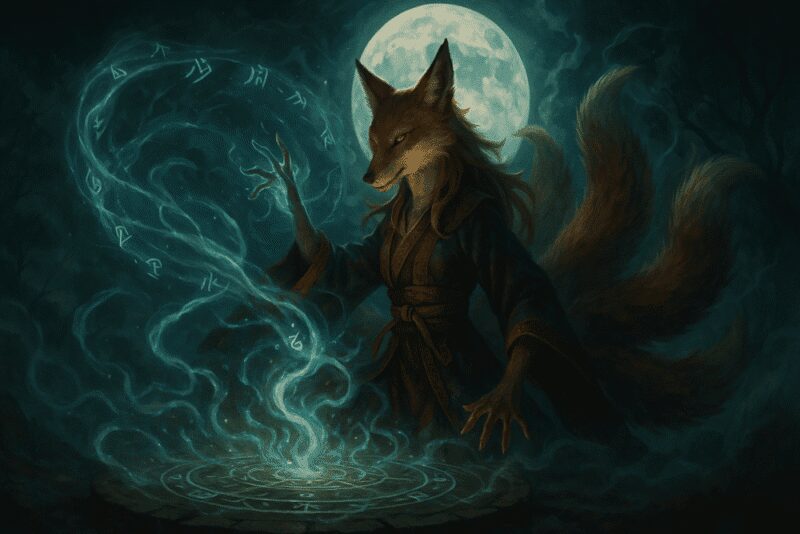
When envisioning a Kitsune, your imagination may conjure the image of a fox with multiple tails, each representing a different aspect of its power and wisdom. According to folklore, a Kitsune can possess up to nine tails, with each tail marking an increase in age, knowledge, and magical strength. The most revered Kitsune, known as “kyūbi no Kitsune” or nine-tailed fox, is said to have unmatched abilities and is often linked with deities or ancient spirits.
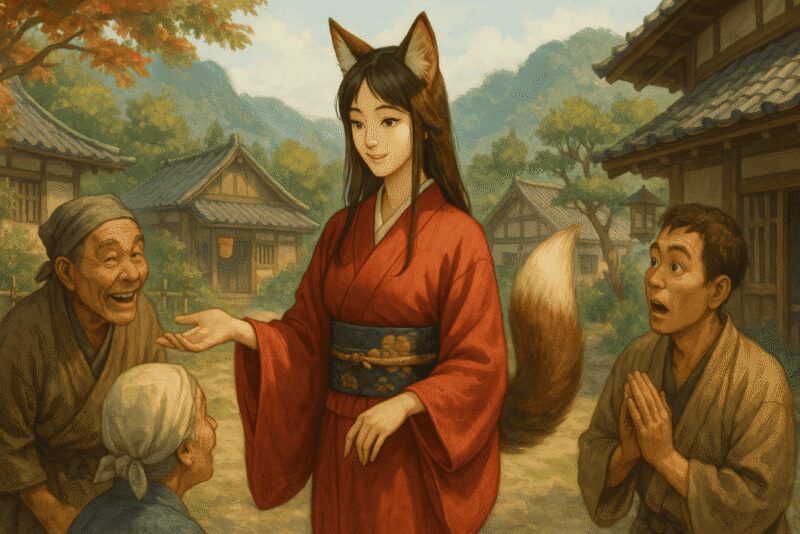
The Kitsune is not limited to a singular form; its most mesmerizing trait is its ability to shape-shift into various forms, most commonly that of a human. In human guise, Kitsune are known for their ethereal beauty and charm, often taking the form of young women to interact with humans. This transformation is so flawless that only certain telltale signs, such as a shadow revealing a fox’s shape or a minor misstep in physical appearance, can betray their true identity.
Despite their shape-shifting prowess, Kitsune retain some fox-like attributes regardless of form. Their eyes, which are often compared to pools of mystery and depth, can mesmerize and enchant those who dare to lock gazes with them. It’s believed that Kitsune possess the power to manipulate these physical charms to achieve their objectives, showcasing both their supernatural and earthly allure.
Behavioral Traits
Kitsune’s behavior is as multifaceted as their physical forms, characterized by a blend of cunning intelligence, mischievousness, and benevolence. These fox spirits are renowned for their playful nature, often engaging in clever pranks that test the wit and resourcefulness of humans. From swapping items in the home to creating elaborate illusions, Kitsune’s antics serve as both entertainment and lessons for those they encounter.
Despite their mischievous tendencies, Kitsune are also known for their deep sense of loyalty and friendship. Many tales depict Kitsune forming bonds with humans, living among them for years, even decades, providing guidance and protection. Their loyalty, however, is not easily earned; it requires genuine kindness and respect from humans, reflecting the Kitsune’s own moral code, which values reciprocity and respect.
The behavioral traits of Kitsune are further complicated by their association with the supernatural. Capable of invisibility, possession, and even the power to create fire or lightning, Kitsune are formidable beings that command respect. Their ability to traverse the thin line between the material and spiritual worlds endows them with a wisdom that is both feared and revered, making them enigmatic yet captivating figures in Japanese mythology.
Kitsune in Culture and Tradition
Role in Folklore
In Japanese folklore, Kitsune are commonly depicted as both benevolent spirits and trickster figures, illustrating the dual nature inherent in their mythology. As guardians, Kitsune are believed to watch over villages and towns, protecting them from evil spirits and ensuring prosperity. This protective role is exemplified in their association with Inari, the rice god, where they serve as divine messengers and custodians of agriculture and fertility.
The trickster side of the Kitsune is equally prominent in folklore, where they are portrayed as cunning entities causing confusion and mayhem through their shape-shifting abilities. Tales often involve Kitsune transforming into humans to deceive and outsmart those who cross their path, using their wit to test the integrity and morals of individuals. These stories serve as moral lessons, warning against greed, arrogance, and vanity, while also highlighting the importance of cleverness and prudence.
Kitsune stories are not limited to a single role, often intertwining their characteristics, reflecting the complexity of human nature itself. This rich tapestry of tales has allowed the Kitsune to remain an integral figure in Japanese folklore, embodying the delicate balance between good and evil, reality and illusion. The Kitsune’s role in these stories serves as a timeless reminder of the complexities and dualities inherent in life itself.
Regional Variations
While Kitsune are a staple in Japanese folklore, regional variations add layers of depth to their mythology. Different regions may emphasize various aspects of Kitsune lore, influenced by local beliefs, geographic features, and historical context. For example, in some regions, Kitsune are more closely associated with water spirits, believed to inhabit lakes and rivers, protecting fishermen and travelers who honor them with offerings.
In the northern regions of Japan, tales often depict Kitsune as yokai (supernatural creatures) embodying the harsh, untamed nature of the landscape. These Kitsune are said to possess an aggressive demeanor, challenging humans to survive and thrive in the face of adversity. Conversely, in the southern regions, Kitsune are portrayed as more gentle and benevolent, reflecting the warmer climate and fertile lands they inhabit.
Tangible cultural manifestations of these regional variations can be seen in local festivals and rituals dedicated to Kitsune. These events provide a unique glimpse into the diverse ways Kitsune are celebrated across Japan, with each region contributing its own flavor and interpretation to the enduring legend of the Kitsune. Understanding these regional differences offers a broader perspective on the Kitsune’s impact on Japanese culture and how it resonates with people across various communities.
Legends and Tales
Famous Encounters
Among the many tales of Kitsune, few are as famous as the story of Tamamo-no-Mae, a legendary nine-tailed fox who played a significant role in the Heian period. According to legend, Tamamo-no-Mae disguised herself as a beautiful and intelligent woman, captivating the heart of Emperor Konoe. However, her ruse was exposed by the onmyoji (court magician) Abe no Seimei, who revealed her true nature as a Kitsune. Fleeing from the emperor’s court, Tamamo-no-Mae transformed into a large rock known as the Sessho-seki, or “Killing Stone,” which was said to kill anyone who touched it. This tale illustrates the powerful allure and danger associated with Kitsune, capturing the imagination of many generations.
Another well-known Kitsune legend is the story of Kuzunoha, a Kitsune who fell in love with a human. Disguised as a woman, Kuzunoha married her human lover and bore him a son. However, when her true identity was accidentally revealed, she was forced to leave her family, but not without imparting her wisdom to her son. This legend emphasizes the themes of love, loss, and the inevitable divide between the human and spiritual worlds, showcasing the emotional depth of Kitsune mythology.
The tale of the White Fox of Shinoda Shrine is another captivating Kitsune story. In this tale, a faithful white fox saves a samurai lord from an enemy’s ambush, leading to the establishment of the Shinoda Shrine in Osaka as a place of worship for Kitsune. This story highlights the protective and loyal nature of Kitsune, further solidifying their role as guardians and divine messengers in Japanese culture.
Symbolism and Meaning
The symbolism and meaning of Kitsune are as diverse as the legends themselves, encompassing themes of transformation, wisdom, and duality. As shape-shifters, Kitsune embody the idea of transformation, both literally and metaphorically, encouraging you to embrace change and adaptability in life. Their ability to take on different forms serves as a reminder of the fluidity of identity and the perpetual evolution of the self.
Wisdom is another significant symbol associated with Kitsune, reflected in their age and magical abilities. The more tails a Kitsune possesses, the greater their wisdom and power, illustrating the connection between experience and knowledge. In this way, Kitsune serve as spiritual guides, offering insight and guidance to those willing to learn from their enigmatic stories.
The duality of the Kitsune, as both protector and trickster, highlights the complexities of moral and ethical behavior. Their dual nature serves as a metaphor for the complexities inherent in human relationships and actions, encouraging contemplation and introspection. By examining the symbolism and meaning of Kitsune, you can gain a deeper understanding of their enduring appeal and relevance in Japanese culture.
Kitsune in Modern Times
Literature and Media
The allure of Kitsune extends beyond traditional folklore, finding a place in modern literature and media across the globe. In literature, authors such as Neil Gaiman have drawn inspiration from Kitsune legends, incorporating them into works like “The Sandman” series. Similarly, the Kitsune makes an appearance in Lian Hearn’s “Tales of the Otori,” where they are depicted as mysterious and potent beings.
In film and television, Kitsune continue to captivate audiences with their mystique and charm. The popular anime series “Naruto” features the Kyūbi, a nine-tailed fox spirit, as a significant character, embodying both destructive power and untapped potential. The Kitsune also appears in “Spirited Away,” directed by Hayao Miyazaki, where they are depicted as transformative spirits in the rich tapestry of the spirit world.
The world of gaming has also embraced the Kitsune, with titles such as “Okami,” where players embody the sun goddess Amaterasu in the form of a white wolf, drawing on Kitsune mythology. Other games like “Fire Emblem” incorporate Kitsune as playable characters with shape-shifting abilities, demonstrating their versatility and enduring appeal across different platforms and audiences.
Contemporary Relevance
The Kitsune’s relevance in contemporary times can be attributed to their timeless themes and their ability to resonate with universal human experiences. In an era where identity and transformation are ever-present topics, the Kitsune serves as a powerful symbol of change and adaptability, encouraging individuals to embrace diversity and personal growth.
In modern society, where cultural exchanges are more prevalent than ever, the Kitsune also represents the blending and adaptation of cultural elements. As a bridge between tradition and modernity, Kitsune mythology offers a unique perspective on the intricate dance between past and present, highlighting the value of preserving cultural heritage while embracing new influences.
Moreover, the Kitsune’s dual nature as protector and trickster continues to resonate in a world where moral ambiguities and ethical dilemmas frequently challenge us. The stories and symbolism of Kitsune encourage you to reflect on the complexities of human behavior and the importance of balance and introspection in navigating life’s challenges. As such, the Kitsune remains not only a captivating figure in folklore but also a meaningful symbol of the human condition.
Conclusion
In conclusion, the Kitsune embodies a rich tapestry of mythology, culture, and symbolism that continues to captivate and inspire across generations. From their ancient roots to their modern interpretations, Kitsune serve as a bridge between the human and spiritual realms, offering profound insights into transformation, wisdom, and duality. As you explore the enigmatic world of the Kitsune, you uncover the timeless allure and enduring significance of these shape-shifting fox spirits within the vast landscape of Japanese folklore.