In the heart of Aztec mythology lies a terrifying and yet profound figure, Tlaltecuhtli, known as the Earth Devourer. This monstrous entity is not just a mythic creature but an integral part of the Aztec cosmology, representing both the life-giving and life-taking forces of the earth. Tlaltecuhtli emerges from ancient tales as a symbol of both creation and destruction, a duality that reflects the complex relationship the Aztecs had with the natural world. Her story, filled with violence and rebirth, is one of the most compelling in Mesoamerican folklore, offering a glimpse into the ancient understanding of the earth’s essential, albeit fearsome, power.
Origins of Tlaltecuhtli
Historical Background
The Aztec Empire, flourishing in what is now central Mexico, was built upon a foundation of rich mythology and religious practices. Within this pantheon, Tlaltecuhtli stands as a primordial deity of the earth. The name Tlaltecuhtli itself can be translated as “Earth Lord” or “Earth Lady,” indicating her role as a sovereign entity over the terrestrial realm. Unlike many other cultures that typically depict the earth as nurturing and gentle, the Aztecs envisioned the earth through Tlaltecuhtli’s more ferocious and unyielding aspects.
Historical records from Nahuatl codices, such as the Codex Borgia and the Codex Fejérváry-Mayer, provide visual and textual evidence of Tlaltecuhtli’s importance. These documents, created by Aztec priests and scholars, offer insights into the deity’s role in creation myths and religious ceremonies. The Aztecs perceived Tlaltecuhtli not just as a figure of folklore but as a vital part of their spiritual and everyday lives, demonstrating the blend of reverence and fear that characterized their view of natural elements.
The Aztecs’ agricultural society heavily depended on the earth, and thus Tlaltecuhtli represented both the giver of sustenance and the harbinger of destruction when angered. This duality is evident in the many stories surrounding her, which were passed down through generations and woven into the cultural and religious fabric of the Aztec people.
Mythological Significance
In Aztec mythology, Tlaltecuhtli plays a crucial role in the creation of the world. The myth of creation, as told by the Aztecs, involves the gods Quetzalcoatl and Tezcatlipoca, who, in order to form the earth, must subdue Tlaltecuhtli. This cosmic battle is a central theme, highlighting her immense power and the necessary violence involved in bringing about creation. Tlaltecuhtli’s body, once torn apart by these gods, transforms into the various elements of the earth, with her back becoming mountains and valleys, and her hair turning into trees and flowers.
This narrative illustrates Tlaltecuhtli as a symbol of transformation and the cyclical nature of life and death. She embodies a paradoxical nature—both a destroyer and a creator—mirroring the Aztec understanding of the universe as a place where life is perpetually born out of sacrifice. Her story emphasizes the importance of balance and the belief that creation often requires destruction.
Moreover, Tlaltecuhtli’s mythological significance extends beyond creation. She is also seen as a guardian of the underworld, overseeing the spirits of the dead and maintaining the earth’s fertility. Her influence in these realms signifies her control over both life and afterlife, reinforcing her position as a central figure in Aztec cosmology and religious practices.
Description of Tlaltecuhtli
Physical Characteristics
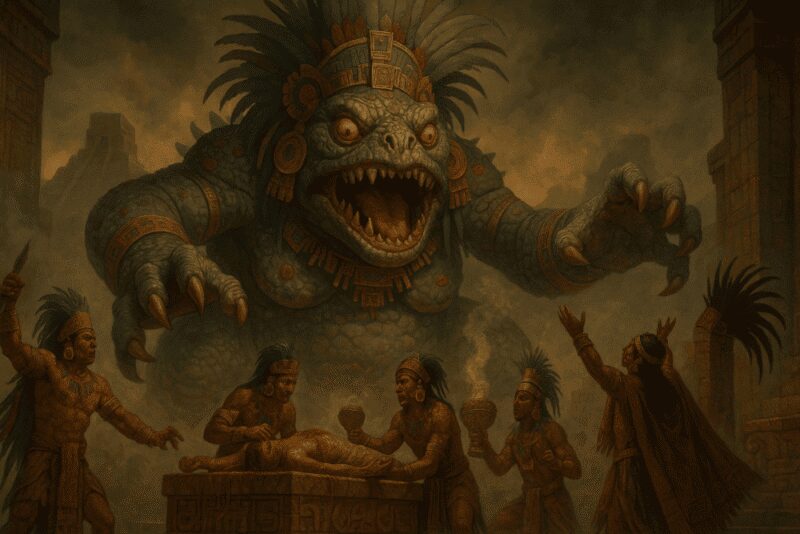
Tlaltecuhtli is often depicted as a fearsome and grotesque creature, embodying the raw and untamed elements of the earth. Her representations in Aztec art typically feature an imposing figure with gaping jaws, sometimes filled with rows of sharp teeth. This imagery symbolizes her role as the devourer of the dead and as a being of insatiable hunger, constantly demanding nourishment from humanity in the form of sacrifices.
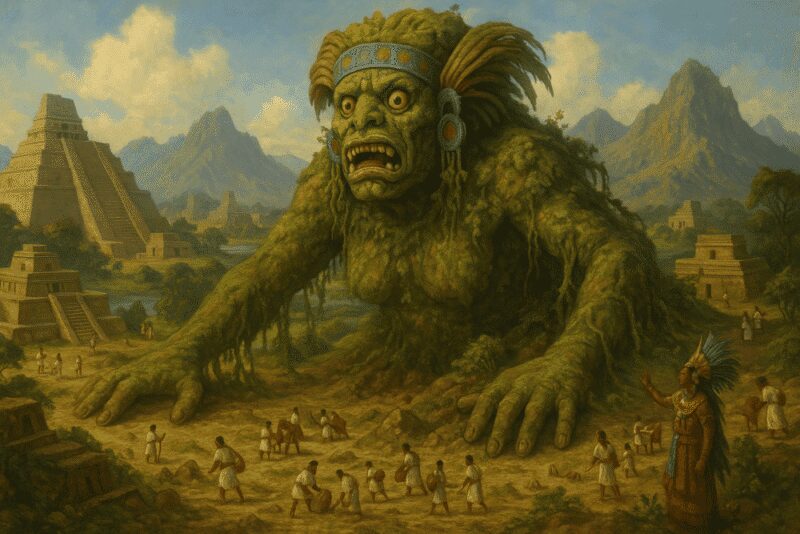
Artists portrayed Tlaltecuhtli with a combination of human and reptilian features, including clawed feet and hands, emphasizing her connection to both the earth and the feral, primordial forces. Often, her body is shown covered in earthly motifs, such as stones and plants, further reinforcing her identity as the earth itself. The depictions on stone carvings and codices highlight her immense size and power, dwarfing human figures and other deities alike.
The color palette used for Tlaltecuhtli in codices and murals often includes greens and browns—colors associated with the earth and vegetation. These artistic choices not only reflect her dominion over the terrestrial realm but also serve to invoke the awe and fear she inspired among the Aztec people. Through these vivid portrayals, Tlaltecuhtli emerges as a formidable embodiment of nature’s might and its potential for destruction.
Behavioral Traits
Tlaltecuhtli’s behavior is as formidable as her appearance. In Aztec mythology, she is characterized by her insatiable hunger for human hearts and blood, which the Aztecs believed were necessary to appease her and ensure the earth’s continued fertility. This need for nourishment is reflected in the numerous rituals and sacrifices conducted in her honor, emphasizing the belief that human life must be offered to sustain the natural world.
Despite her fearsome traits, Tlaltecuhtli is not portrayed simply as a malevolent force. Her destructive tendencies are balanced by her role as a nurturer. While she demands sacrifices, she also provides—the earth’s bounty, the growth of crops, and the stability of the land. This dual role reflects the Aztec view of the earth as a giver and taker, a provider that must be respected and feared in equal measure.
In narratives, Tlaltecuhtli is often seen as unyielding and fierce, reflecting the unpredictability and harshness of nature itself. However, she is also depicted as a regulator of cosmic balance, ensuring that life and death are in harmony. Through her actions, the Aztecs understood the necessity of living in accordance with the cycles of nature, accepting both the bounty and the sacrifice it demands.
Tlaltecuhtli in Culture and Tradition
Role in Folklore
Tlaltecuhtli occupies a significant place in Aztec folklore, serving both as a cautionary figure and a reminder of the earth’s vital role in human existence. Stories about Tlaltecuhtli were passed down through generations, integrating her presence into the cultural consciousness of the Aztec people. These tales often emphasized her dual nature—as both a creator and a destroyer—highlighting the delicate balance the Aztecs sought to maintain with the natural world.
The narratives surrounding Tlaltecuhtli often served as didactic tools, teaching lessons about respect for the earth and the importance of sacrifice. Through these stories, the Aztecs conveyed the message that human life and prosperity are intimately connected to the forces of nature, and that neglecting these relationships could lead to disaster and ruin. Such folklore reinforced the societal norms and religious beliefs that shaped Aztec civilization.
Moreover, Tlaltecuhtli’s tales were not confined to the abstract; they were brought to life through ritual practices and artistic expressions. Temples dedicated to earth deities were adorned with carvings and images of Tlaltecuhtli, serving as constant reminders of her presence and power. These cultural expressions ensured that her influence permeated every aspect of Aztec society, from the political to the spiritual.
Regional Variations
While Tlaltecuhtli was a central figure in Aztec mythology, interpretations of her role and significance varied across different regions of the Aztec empire. Some areas emphasized her nurturing aspect, depicting her more as a protective mother figure who ensured the fertility of the land and the prosperity of the people. In these regions, rituals focused on her life-giving powers, celebrating the harvests and natural abundance she provided.
Conversely, other regions highlighted her more fearsome characteristics, portraying her as a voracious entity that needed to be constantly appeased through sacrifices. In these areas, Tlaltecuhtli’s image served as a reminder of the potential wrath of nature and the necessity of maintaining harmony through rituals and offerings. Such variations reflect the diversity in local traditions and environmental conditions, influencing how Tlaltecuhtli’s story was told and understood.
These regional differences in the interpretation of Tlaltecuhtli’s mythology underscore the adaptability of Aztec religion and the ways in which it integrated diverse beliefs and practices. Despite these variations, the core tenets of Tlaltecuhtli’s role as an earth deity remained consistent, reinforcing her central place in the collective Aztec cultural identity.
Legends and Tales
Famous Encounters
Among the myriad stories of Tlaltecuhtli, one of the most famous tales involves her encounter with the gods Quetzalcoatl and Tezcatlipoca. According to this creation myth, Tlaltecuhtli, in her monstrous form, roamed the primordial waters, threatening the cosmos with her insatiable hunger. To create the earth, Quetzalcoatl and Tezcatlipoca took on the arduous task of subduing her. In a fierce battle, they transformed into giant serpents, attacking Tlaltecuhtli from both sides until they tore her body apart. From her dismembered corpse, the various elements of the earth were formed, with her head becoming the towering mountains and her blood the flowing rivers.
This violent creation myth not only illustrates the immense power of Tlaltecuhtli but also serves as an allegory for the cycle of destruction and creation. It is a tale that underscores the belief that the earth itself was born from sacrifice and that such acts are necessary to sustain the world. The story of this cosmic battle was a fundamental part of Aztec cultural and religious education, often depicted in temple murals and recounted during important religious ceremonies.
Another notable encounter involves Tlaltecuhtli’s interactions with Tonatiuh, the sun god. In this story, Tlaltecuhtli demands regular offerings in the form of human hearts, which are necessary to keep the sun moving across the sky. This tale further solidifies her role as a deity who must be appeased to ensure the continuation of life, emphasizing her power over both the terrestrial and celestial realms.
Symbolism and Meaning
Tlaltecuhtli, as a symbol, conveys a multitude of meanings that permeate Aztec culture and philosophy. At the heart of her symbolism lies the concept of duality—a representation of life and death, creation and destruction, nurturing and devouring. This duality is a fundamental aspect of the Aztec worldview, where everything exists in balance and harmony can only be achieved through the acknowledgment of opposing forces.
Her association with the earth as both a life-giving and life-taking entity reflects the Aztecs’ understanding of the natural world. The depiction of Tlaltecuhtli as a monstrous figure that demands sacrifice highlights the belief that life is a cycle of giving and taking, where the prosperity of the earth must be maintained through offerings and respect. This notion is further reinforced by the agricultural dependency of the Aztec civilization, making Tlaltecuhtli a powerful reminder of nature’s unpredictability and the need for reverence.
In religious and ritual contexts, Tlaltecuhtli embodies the earth’s fertility and the inevitable return to it after death. Her symbolism extends to the afterlife, where she governs the spirits of the dead and ensures the cycle of rebirth. Through these layers of meaning, Tlaltecuhtli stands as a complex and multifaceted figure, embodying the profound and intricate beliefs of the Aztec people regarding life, death, and the cosmos.
Tlaltecuhtli in Modern Times
Literature and Media
The enduring legacy of Tlaltecuhtli has found its way into modern literature and media, captivating audiences with her rich mythology and formidable presence. In books such as “The Broken Spears: The Aztec Account of the Conquest of Mexico,” her story is revisited through the lens of historical events, offering insights into the Aztec civilization and their beliefs. Tlaltecuhtli’s mythological narrative is also explored in fictional works like “Gods of Jade and Shadow” by Silvia Moreno-Garcia, which delves into Mesoamerican mythology to create a vivid tapestry of storytelling.
In the realm of visual media, Tlaltecuhtli has inspired numerous documentaries and educational programs, shedding light on Aztec mythology and culture for contemporary audiences. Her fearsome image and the dramatic tales associated with her provide rich material for documentaries that explore the complex belief systems of ancient Mesoamerican civilizations. Furthermore, her influence extends to video games such as “Assassin’s Creed: Valhalla” and “Civilization VI,” where elements of Aztec mythology, including Tlaltecuhtli, are integrated into game narratives and aesthetics, bringing these ancient stories to life for a new generation.
Through these various forms of media, Tlaltecuhtli’s myth continues to captivate and inspire, reflecting an ongoing fascination with Aztec culture and the mysterious allure of ancient mythologies. Her presence in literature and media not only preserves her legacy but also introduces her story to diverse audiences around the world.
Contemporary Relevance
In modern times, Tlaltecuhtli’s story resonates with contemporary themes of environmental consciousness and the interconnectedness of life and nature. As societies around the world grapple with ecological concerns, the mythology of Tlaltecuhtli offers a poignant reminder of the earth’s dual nature as both a provider and a destroyer. Her tale underscores the necessity of maintaining balance with the natural world, echoing current discussions on sustainability and environmental stewardship.
Furthermore, Tlaltecuhtli’s representation of duality and transformation finds relevance in contemporary philosophical and spiritual discourses. Her story encourages a deeper understanding of the cyclical nature of existence, promoting acceptance of change and the inevitability of death as part of life’s continuum. These themes are increasingly explored in modern spiritual practices, where ancient wisdoms are revisited and reinterpreted in the context of current existential challenges.
As an icon of both fear and reverence, Tlaltecuhtli continues to inspire artists, writers, and thinkers to engage with her mythology, drawing parallels between the ancient and the modern. Her enduring presence serves as a testament to the timeless nature of myths and their ability to offer insights into the human condition across the ages.
Conclusion
Tlaltecuhtli’s story is one of profound complexity and enduring significance, capturing the essence of Aztec mythology and its intricate relationship with the natural world. Her dual nature as both a creator and a destroyer reflects the fundamental beliefs of the Aztec civilization, offering timeless lessons on balance and reverence for the earth. In modern times, her mythology continues to inspire and captivate, proving that the stories of the past hold valuable insights for the present and future.