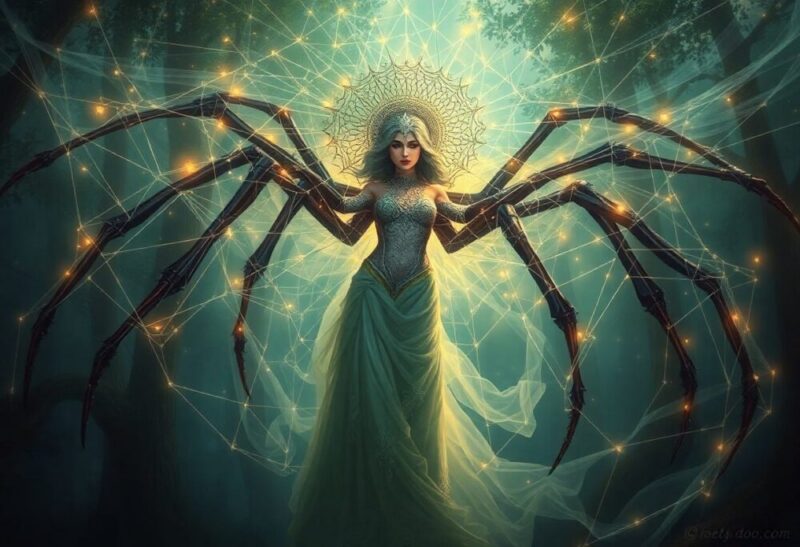
Over centuries, myths and legends have captured the imagination, and one such tale is that of Arachne, a skilled weaver who faced the wrath of the gods. Your understanding of this fascinating story reveals both the perils of hubris and the transformative power of art. As you journey through Arachne’s story, you will uncover the nuances of her talent, her confrontation with the goddess Athena, and the lessons learned from her tragic fate. Join us as we examine into the threads of this timeless myth and explore its meaning in today’s world.
The Myth of Arachne
For those intrigued by ancient mythology, the tale of Arachne unveils the poignant consequences of pride and ambition. Arachne was a gifted mortal weaver whose skill rivaled that of the goddess Athena. This myth serves not only as an entertaining story but also as a lasting lesson about recognizing one’s place in the natural order and the potential pitfalls of hubris. You may find that Arachne’s story resonates with the struggles between talent and humility in your own life.
The Tale of Hubris
Behind Arachne’s undeniable talent lay a deep-seated arrogance. She boasted that her weaving skills surpassed those of Athena, the goddess of wisdom and crafts. This hubris attracted the attention of the goddess herself, sparking a series of events that would ultimately lead to Arachne’s downfall. As you reflect on this tale, consider how unchecked confidence can transform even the most talented individuals into their own worst enemies.
The Challenge with Athena
With Arachne’s boastful claims ringing in the air, Athena descended to confront her. Rather than bow down in respect, Arachne welcomed the challenge, inviting the goddess to a weaving contest. You can sense the tension in the air as two formidable forces prepare to clash, each weaving their own narrative through threads of vibrant fabric. This moment not only highlights Arachne’s audacity but also sets the stage for a dramatic showdown between mortal and divine.
But Arachne’s confidence blinded her to the risks involved in challenging a goddess. As the contest unfolded, both weavers produced exquisite tapestries, each telling their own story. However, while Arachne depicted scenes that critiqued the gods’ flaws, Athena chose images celebrating her own power and wisdom. This critical moment reveals that the battle was not just about skill; it was a clash of values, reverberating through the ages as a reminder of the consequences of prideful defiance. Your own ambitions might similarly benefit from a consideration of respect and wisdom.

The Role of Weaving in Ancient Culture
Clearly, weaving was not just a practical skill in ancient cultures; it represented a vital aspect of daily life and social order. Textiles were imperative for clothing, shelter, and trade, while the act of weaving was often associated with various rituals and ceremonies. As you explore the significance of textiles, you’ll find that many communities believed that woven items held protective qualities and were integral to their spiritual practices, highlighting the rich connection between weaving and cultural identity.
Symbolism of Weaving
Symbolism in weaving extends beyond mere craft; it reflects the interconnectedness of life, creativity, and fate. You may appreciate how woven patterns often symbolize the intricate relationships and stories of the weaver’s community. The loom serves as a metaphor for the fabric of life, with threads representing individual lives interwoven to create a broader tapestry that tells your community’s story.
Weavers in Mythology
On your journey through mythology, you’ll encounter various weavers who embody both creative and destructive powers. The depiction of weavers often aligns with themes of fate and destiny, showcasing your ability to shape not only physical textiles but also the very fabric of life itself.
At the heart of mythology, weavers like Arachne and the Greek Moirai illustrate how this craft transcends mere artistry to become a powerful symbol of control over fate and creation. In your exploration, you might find that these figures often face formidable consequences, revealing insights about the balance of skill and hubris. Their stories can teach you about the cultural relevance of weaving, serving as a reminder of the respect afforded to those who master such profound arts within their communities.
Transformation into a Spider
It is said that Arachne, once a gifted weaver, faced dire consequences when she challenged the gods. Her pride led to a fateful clash with Athena, resulting in a competition that revealed the depths of her talent. When Arachne’s work surpassed that of the goddess, Athena, furious and unwilling to accept defeat, transformed her into a spider, cursing her to weave eternally. This moment solidified her as a figure embodying both talent and the tragic pitfalls of hubris.
The Significance of the Transformation
After Arachne’s transformation, the symbolism of her new form became clear; she represented the consequences of challenging divine authority. As a spider, she became an emblem of artistry intertwined with struggle. The small yet intricate webs she spun echoed her past mastery of weaving, but they also served as a reminder of her fall from grace. Your understanding of this transformation invites you to reflect on the balance between ambition and humility.
Arachne’s Legacy
Across generations, Arachne’s story has transcended its mythological roots to inspire contemporary discussions about creativity and rebellion. Her transformation serves as a poignant metaphor for those who push boundaries, often facing backlash for their boldness. You can find her legacy reflected in literature, art, and modern interpretations that celebrate individualism while cautioning against overreaching.
For instance, her tale is often revisited in artistic domains, from literature to visual art, where her spirit of defiance against authority is celebrated. Many contemporary creators see Arachne as an icon of resilience, encouraging people to embrace their unique gifts. This legacy compels you to consider the importance of confidence in expressing your talents while remaining mindful of the humility that often fosters growth and connection with others.
Interpretations of Arachne’s Story
Many interpretations of Arachne’s tale reflect deeper societal issues, particularly the struggle between individual talent and societal expectations. Her transformation into a spider symbolizes not just punishment, but also the silencing of unique voices. Through various readings, you can explore themes of dominance, creativity, and the enduring conflict between artisans and the gods, providing a modern context to ancient tales. This story encourages you to reflect on the value of skill, inspiration, and the personal costs of artistic ambition.
Feminist Perspectives
Any feminist interpretation of Arachne’s story emphasizes the struggle against patriarchal authority. In this view, Arachne becomes a symbol of female empowerment, challenging traditional gender roles. By daring to compete with a male deity, you can see her as a representation of women pursuing their passions despite societal limitations, encouraging you to consider contemporary issues faced by women in creative fields today.
The Nature of Art and Skill
Perspectives on the nature of art and skill in Arachne’s story investigate into the relationship between creator and creation. The narrative invites you to contemplate the essence of artistry, questioning whether it is an innate talent or a learned skill. Additionally, it raises the issue of whether the act of creation remains a form of self-expression or becomes overshadowed by external validation. A deeper inquiry into Arachne’s journey reveals that while art is personal, it is also subject to the perceptions and judgments of society, illustrating the complexities of artistic identity.
Arachne in Modern Culture
Unlike ancient times, where Arachne was merely a mythological character, her story has evolved into a powerful symbol in modern culture. You can find Arachne’s influence in contemporary discussions on creativity, hubris, and the consequences of challenging the gods. Her tale prompts a valuable reflection on the balance between ambition and humility, making her relevant to your understanding of artistic expression today.
Adaptations in Literature and Art
Along the lines of her tragic narrative, various adaptations of Arachne have emerged in literature and visual arts, showcasing the timelessness of her character. You might explore works that reinterpret her story, emphasizing themes of empowerment and resilience. Whether through poetry, short stories, or paintings, these adaptations resonate with your own experiences of overcoming challenges.
References in Popular Media
Across different forms of popular media, Arachne’s tale continues to inspire stories that explore the intersections of artistry and consequence. You may find references to her character in TV shows, movies, and video games, where her story serves as a metaphor for the struggle of creators against societal expectations and the risks of ambition.
Indeed, the legacy of Arachne can be seen across various platforms, influencing creators and audiences alike. In films like “Tangled,” where themes of creativity and rebellion abound, or in graphic novels that depict her as a strong, defiant figure, Arachne embodies the complex relationship between ambition and consequence. Such references help you appreciate the relevance of her story in navigating the challenges of modern creativity and the quest for personal identity.
To wrap up
On the whole, the tale of Arachne illustrates the timeless themes of pride, skill, and the consequences of defying the gods. As you explore Arachne’s journey from exceptional weaver to a spider, you gain insight into the values and cultural narratives that shaped ancient mythology. This transformation serves as a powerful reminder of the delicate balance between confidence and humility. By understanding Arachne’s story, you can reflect on your own talents and the importance of respecting limits, as well as the influence of fate in your life.