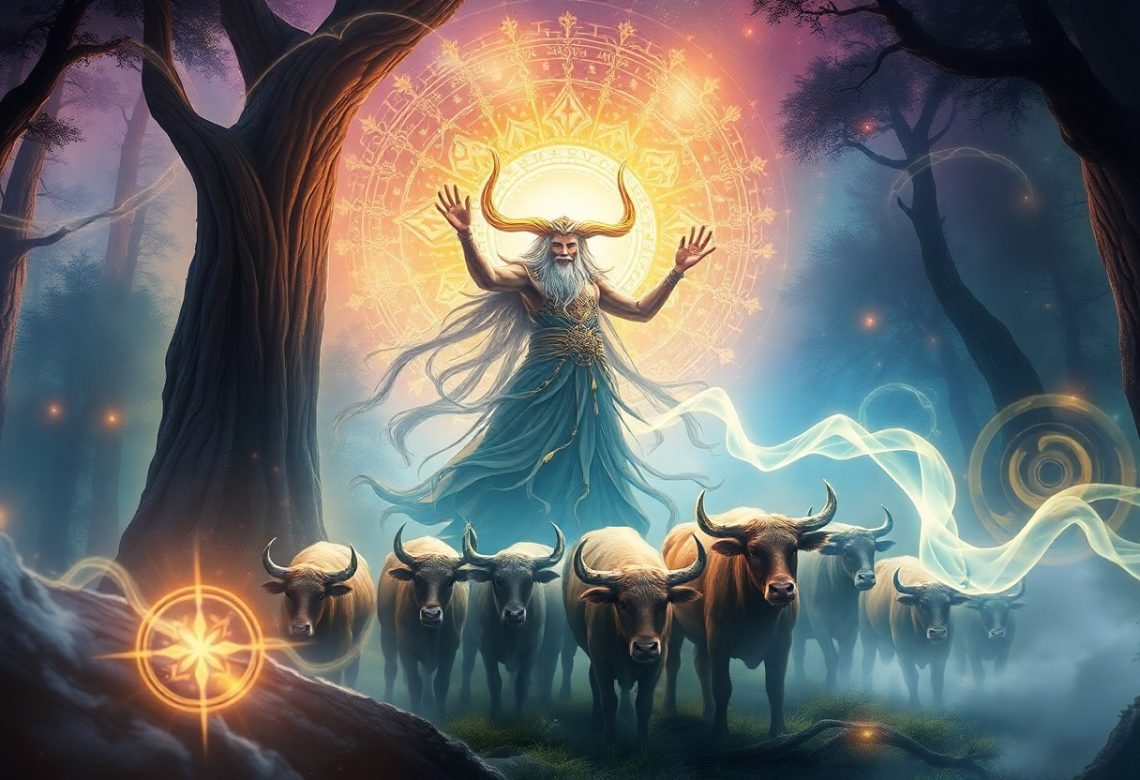
Many ancient cultures revered deities for their unique attributes, and Veles stands out as a compelling figure in Slavic mythology. As the Trickster God of Cattle and Magic, you may find it fascinating how Veles embodies both chaos and protection within livestock and earthly treasures. This multifaceted deity not only highlights the importance of cattle in ancient Slavic societies but also showcases the intricate relationship between magic and everyday life. In this post, you will explore the rich lore surrounding Veles and the lessons he imparts about balance, cunning, and the unseen forces that guide your world.

Origins of Veles
While Veles, the enigmatic trickster god of cattle and magic, has roots in ancient Slavic mythology, his exact origins remain shrouded in mystery. His dual association with cattle and the underworld signifies a blending of agricultural and spiritual elements, reflecting the complex relationship between early Slavic tribes and their environment. As you explore Veles’ origins, you’ll discover how he embodies both the nurturing aspect of life and the darker elements of the human experience.
Historical Context
Around the formation of the early Slavic nations, Veles emerged as a significant figure within their pantheon. His depiction evolved as communities transitioned from nomadic lifestyles to settled agricultural practices. The reverence for Veles was indicative of the societal changes, representing the values and beliefs of the time as they navigated their connection with nature, livestock, and the supernatural.
Cultural Significance
At the heart of Slavic culture, Veles holds a pivotal role that extends beyond mere mythology. He represents the rich tapestry of agricultural life, embodying not just the prosperity of cattle but also the trickster elements that challenge traditional beliefs. His stories have transcended generations, imbuing celebrations, folklore, and rituals with lessons about the balance between chaos and order.
This cultural significance of Veles manifests in various rituals and festivals, where you can see elements of his influence in agricultural celebrations or rites of passage. His characterization as a trickster serves as a reminder of the unpredictability of life and the necessity of adaptability. In embracing Veles, you connect with the deeper meanings of Slavic heritage—balancing the abundance of life and the complexities of existence, reflecting your own journey through challenges and triumphs.
Veles in Mythology
One of the most intriguing figures in Slavic mythology, Veles embodies the duality of creation and destruction. As the god of cattle and magic, you will find that Veles represents a wealth of agricultural resources and the mystique of the underworld. His stories often highlight his conflicts with Perun, the storm god, showing the tension between the natural and supernatural worlds that defined early Slavic beliefs.
Legends and Stories
Among the many captivating tales surrounding Veles, you may encounter legends of his shape-shifting abilities, where he transforms into various animals to outwit his adversaries. These narratives often illustrate the balance of power between Veles and Perun, emphasizing the cyclical nature of life, death, and rebirth within the Slavic cosmos.
Symbolism of Cattle
To understand Veles more deeply, you should consider the significance of cattle in his mythology. Cattle were seen as symbols of wealth, abundance, and sustenance, making Veles a pivotal figure in agrarian societies. The reverence for cattle also underscores the interconnectedness of nature and spirituality, often linking the prosperity of the land to divine favor.
Considering the importance of cattle, you can appreciate how Veles’ role as a protector of livestock extended beyond mere sustenance. Cattle were vital to social status and economic stability, thus elevating Veles to a guardian of not only the physical but also the spiritual prosperity of the community. This connection emphasizes the deep reverence for nature prevalent in Slavic culture, reflecting your own relationship with the land and its resources.
Veles as a Trickster
Clearly, Veles embodies the essence of the trickster archetype, weaving mischief and cunning throughout various mythologies. As the god of cattle and magic, he often employs deceptive tactics to outsmart gods and mortals alike. His playful and unpredictable nature keeps you on your toes, reminding you that not all encounters are straightforward and that wisdom can sometimes emerge from chaos.
Characteristics of Trickster Gods
Between the dualities of chaos and order, trickster gods like Veles blur the lines, embodying both destruction and creation. They often challenge societal norms, provoke thought, and inspire change through clever antics. Typically, you will find them exhibiting traits such as intelligence, humorous sarcasm, and a knack for problem-solving, which captivates the hearts and minds of their audiences.
Veles’ Role in Folklore
Below the surface, Veles plays a significant role in the tapestry of Slavic folklore, where his adventures are retold through generations. He serves as a connector between the tangible world of mortals and the ethereal realm of the gods, using his trickster qualities to highlight life’s complexities.
To gain a deeper understanding of Veles’ role in folklore, consider how his stories reflect moral lessons and social commentary. You will find that he often personifies the struggles between good and evil, life and death, and the balance of nature. His ability to deceive and manipulate serves as a cautionary tale, illustrating the unpredictability of fate and the importance of wit in navigating challenges. By engaging with Veles’ narratives, you can appreciate the rich cultural heritage and the wisdom embedded in these age-old tales.

Worship and Rituals
Not only did the ancient Slavs venerate Veles through offerings of cattle and magical artifacts, but they also celebrated significant agricultural events with dedicated rituals. These ceremonies often involved music, dances, and storytelling, which highlighted Veles’s dual association with cattle and the mystical aspects of the natural world. You might find festivals in the spring marking the start of the grazing season, resonating with communal joy and devotion to this trickster god.
Ancient Practices
To honor Veles, ancient slavic practitioners often performed rituals near sacred groves or water bodies, believed to be gateways to the spirit world. These ceremonies were invariably steeped in folklore, invoking Veles’s protection for livestock and ensuring a bountiful harvest. You’d observe worshipers offer symbolic sacrifices, such as grain or small livestock, to express gratitude and seek blessings for favorable conditions.
Modern Interpretations
Along with the revival of interest in pagan traditions, modern interpretations of Veles’s worship have emerged, often incorporating contemporary spirituality with ancient customs. You may find practitioners emphasizing personal empowerment and connection to nature, using both traditional rituals and new age practices to cultivate a relationship with Veles.
Rituals today may blend ancient elements such as offerings or prayers with personal intentions, illustrating how you can adapt age-old practices to fit your understanding of spirituality. Celebrating at the changing of the seasons or during pivotal life moments can serve as a powerful way to engage with Veles, as you draw on the rich tapestry of myth and meaning he represents. This melding of the past with the present allows you to forge a unique connection that resonates with your beliefs while honoring the spirit of the trickster god.
Comparisons to Other Deities
Despite Veles’ unique attributes, comparisons to other deities can be insightful. Here’s a brief overview of how he relates to various figures across mythologies:
Comparison Table
| Deity | Similarities |
| Loki (Norse) | Both are known as tricksters who manipulate situations for their gain. |
| Cernunnos (Celtic) | Associated with livestock and nature, holding a significant place in agricultural societies. |
| Pan (Greek) | Similar connection to nature and invoked in herding rituals. |
Similarities with Other Trickster Figures
Along with other trickster figures, Veles shares a common thread of cunning and mischief, often challenging the established order. His role as a deceptive figure allows him to outsmart both gods and humans, reflecting the universal theme of chaos versus control in various mythologies. You can observe this similarity in other cultures, where tricksters often serve as both creators and disruptors.
Unique Aspects of Veles
With his deep connections to both magic and cattle, Veles stands out among trickster deities. He embodies duality, balancing themes of agriculture and the supernatural, making him a complex figure in Slavic mythology. You can appreciate this blend of earthly and mystical attributes, illustrating how Veles navigates the realms of gods and mortals alike.
But what truly sets Veles apart is his role as a protector of cattle and a god of magic, often seen as an embodiment of fertility and renewal. His influences stretch into various aspects of daily life, particularly agriculture, making him imperative for sustaining the communities you might read about. This multi-faceted nature, combined with his trickster elements, illustrates a unique figure who encapsulates both mischievousness and benevolence, reflecting the intricate balance of life’s forces.

The Legacy of Veles
Unlike many ancient deities, Veles has maintained a lasting influence on various aspects of culture, religion, and artistry. His role as a trickster god symbolizes transformation and adaptability, resonating through folklore and practices over centuries. You can observe how Veles inspires various traditions that celebrate nature, cattle herding, and magic, while also influencing the spiritual beliefs of numerous Slavic communities. His legacy is a testament to the interconnectedness of society, tradition, and the ever-evolving understanding of divinity.
Influence on Contemporary Culture
Across modern art, literature, and even music, the spirit of Veles is woven into narratives that explore the themes of trickery, deception, and the relationship between humanity and nature. You may find references to Veles in contemporary works, illustrating how ancient archetypes influence today’s storytelling. Additionally, his character embodies values that resonate with audiences, such as resilience, adaptability, and the balance of chaos and order.
Veles in Literature and Art
Any exploration of Veles in literature and art reveals a diverse range of interpretations that celebrate his complexity. Artists and writers draw inspiration from his embodiments of mystery and magic, often portraying him as a figure of transformation. His representation varies from benevolent protector to cunning trickster, reflecting your curiosity and fascination with duality in storytelling.
Another notable aspect of Veles in literature and art is his appearance in Slavic folklore collections, where tales showcase him interacting with other deities or humans. You may notice how these stories highlight moral lessons, emphasizing cunning and wisdom. Modern adaptations continue to reinterpret Veles, reinforcing his relevance in contemporary discourse on identity and nature. Through poetry, visual arts, and narrative fiction, the enduring legacy of Veles forces you to consider the intricate layers of a character that transcends time and culture.
Summing up
Taking this into account, you can appreciate Veles not only as the Trickster God of cattle and magic but also as a significant figure in Slavic mythology that embodies themes of duality and transformation. By understanding Veles’ complex nature and influences, you gain insight into ancient beliefs surrounding life, death, and the spiritual connections between humans and nature. Embracing Veles’ legacy can enrich your appreciation for the cultural narratives that have shaped the understanding of the natural world and its enigmatic forces.


