
Most myths fascinate us with their complex characters, and the tale of the Minotaur is no exception. This legendary creature, a half-man, half-bull, was said to dwell within the intricate Labyrinth designed by Daedalus on the island of Crete. As you explore the history and symbolism of the Minotaur, you’ll uncover the deeper meanings behind this iconic figure, and how it has influenced literature and art throughout the ages. Join me as we investigate into the mythos of the Minotaur and its lasting impact on culture.
Historical Background
A deep explore the historical roots of the Minotaur myth reveals a rich tapestry of ancient beliefs, cultural practices, and geopolitical contexts that shaped its narrative. Originating from ancient Crete, this legend has not only captivated audiences but also served as a reflection of societal fears and values. By exploring this historical background, you can gain insight into how the Minotaur symbolizes humanity’s struggle with the monstrous aspects of existence.
Origins of the Minotaur Myth
Before delving into the complexities of the Minotaur story, it is crucial to understand its origins. The myth likely emerged from Minoan civilization’s historical and archaeological context, where bull worship played a significant role. The fusion of these practices with storytelling has led to the enduring tale of the beast, capturing your imagination as you reflect on its implications.
Cultural Significance in Ancient Greece
Historical narratives demonstrate that the Minotaur myth resonated deeply in ancient Greek culture, symbolizing the conflict between civilization and chaos. You’ll find that this myth was not just a thrilling story but also served as a moral lesson about hubris and the consequences of one’s actions. The labyrinth, often representing complex human emotions and societal structures, guided people in contemplating their own paths and decisions.
Another layer of cultural significance lies in the myth’s representation of societal challenges and rites of passage. The tale of Theseus and the Minotaur offered profound lessons about bravery and sacrifice, encouraging listeners to confront their fears. You could interpret the labyrinth as a metaphor for life’s challenges; navigating it required courage and intellect. Through dramatic retellings, ancient Greeks engaged with these themes, integrating the myth into their daily lives and collective consciousness.
The Labyrinth
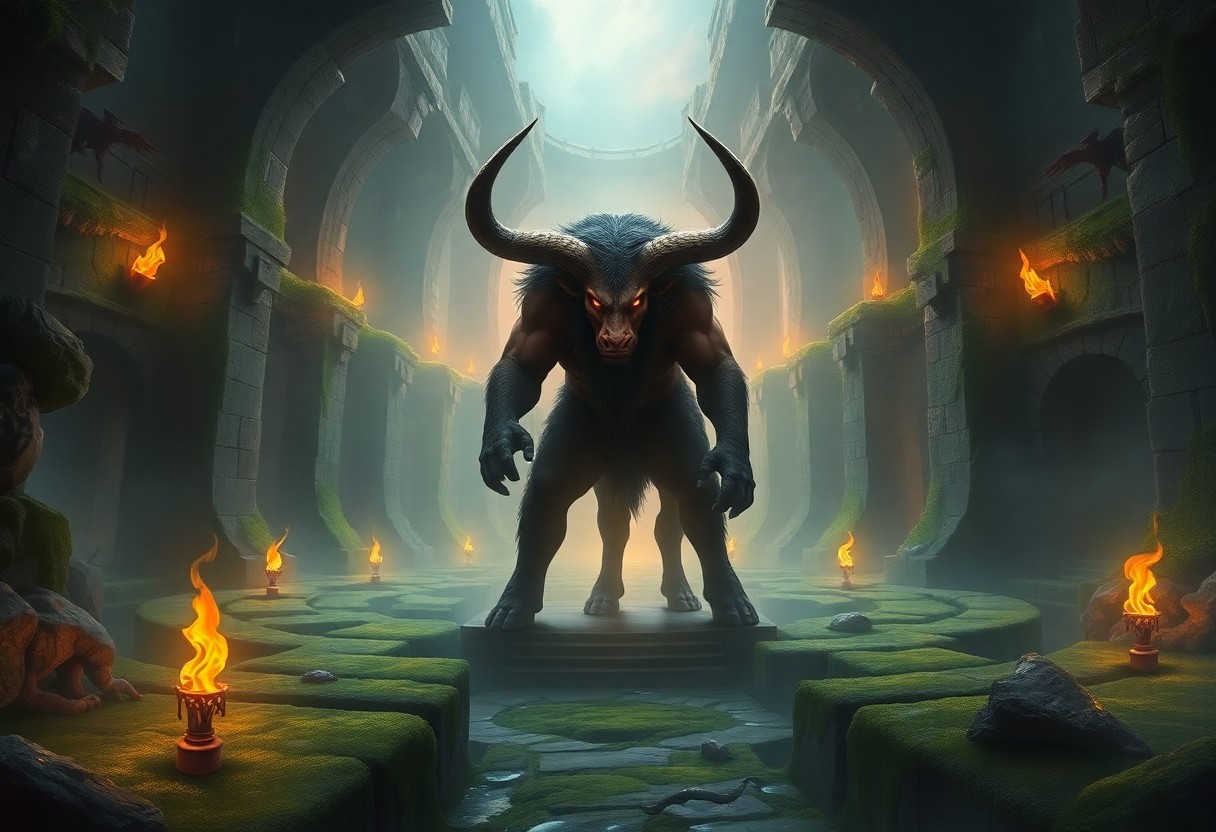
Now, you are drawn into the enigmatic world of the Labyrinth, a sprawling maze designed to confound anyone who dares enter. Built by Daedalus, its twists and turns served not only to imprison the fearsome Minotaur but to challenge the wits of those seeking to confront the beast. The very layout keeps adventurers on edge, ensuring that escape remains a distant hope while danger stalks their every step.
Architecture and Design
Beside its notorious functionality, the Labyrinth’s architecture is a marvel of ingenious design. Crafted with winding passages and high stone walls, it cleverly creates disorientation in even the most skilled navigators. You may find that the structure is a blend of beauty and dread, its intricacies showcasing Daedalus’s unrivaled craftsmanship while serving a darker purpose.
Symbolism of the Labyrinth
Among the myriad interpretations of the Labyrinth, its symbolism often centers around understanding the journey you take through life. Many view it as a representation of your inner struggles, with the winding paths reflecting the complexities of existence. Each turn you encounter is a choice, and every dead end represents a lesson learned on your life’s voyage.
In addition, the Labyrinth embodies the concept of self-discovery and transformation. As you navigate its twists, you may encounter your own fears and insecurities, paralleling the trials faced by heroes throughout mythology. The labyrinthine path symbolizes not just external conflict, but also the internal journey toward enlightenment and resolution, urging you to confront the metaphorical Minotaurs that reside within.
Key Players in the Myth
Any exploration of the Minotaur myth leads you to recognize the noteworthy figures who shaped the narrative. These characters are integral to understanding the tale’s themes of bravery, love, and sacrifice. Among them, you will find Theseus, the ambitious hero, and Ariadne, the clever heroine who plays a pivotal role in the story’s resolution.
Theseus and His Heroic Quest
Among the heroes of Greek mythology, Theseus stands out for his determination to vanquish the Minotaur and free Athens from its dreadful fate. His journey is not only about defeating a monster but also about asserting his identity and strength, challenging the status quo through courage and skill.
Ariadne’s Role and Contribution
Myth often portrays Ariadne as the unsung heroine behind Theseus’s success. She provided him with vital tools—a ball of thread to navigate the labyrinth—signifying her intelligence and resourcefulness. Without her guidance, Theseus’s quest would have been far more daunting, showcasing the importance of collaboration in overcoming life’s challenges.
With Ariadne’s unwavering support, you can see how critical her role is within the larger narrative. Her thread symbolizes not only a means of escape but also the bond shared between them. When you reflect on her actions, it becomes clear that courage and cleverness can come from unexpected sources, emphasizing the significance of female figures in mythology.
The Minotaur’s Characteristics
Despite the mythical aura surrounding the Minotaur, it’s important to understand its distinct characteristics that define this legendary creature. The Minotaur is not just a monster; it embodies a unique blend of human and animal traits that evoke a sense of terror and fascination. Its presence in the Greek mythos serves as a symbol of chaos, power, and the dark side of human nature, illustrating how such characteristics resonate across various narratives.
Physical Description
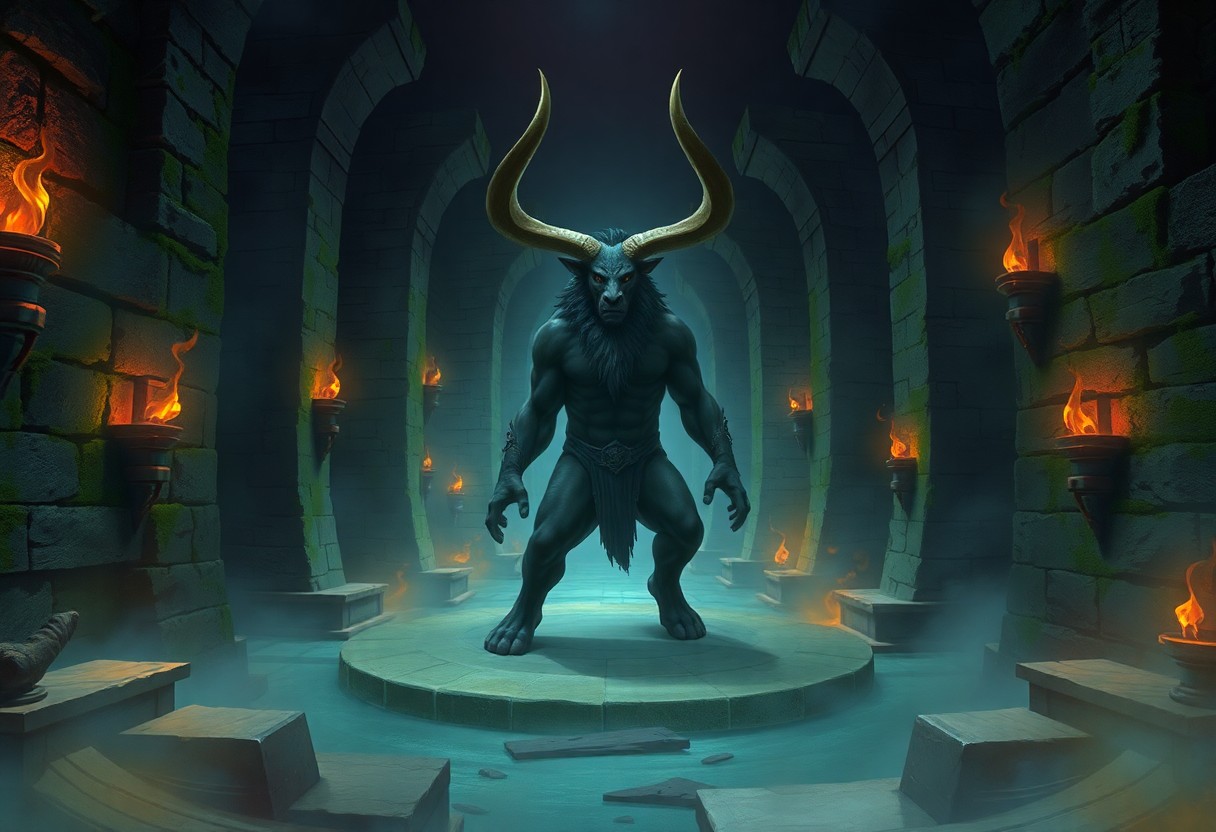
Against the backdrop of the labyrinth, the Minotaur is described as a towering figure with the body of a man and the head of a bull. This striking physicality captures your imagination, presenting a creature more beast than human yet retaining an unsettling symmetry. You’ll find that its muscular build and formidable stature contribute to its fearsome reputation, making it a perfect guardian of the labyrinth.
Behavioral Traits
Any encounter with the Minotaur would likely reveal its fierce and unpredictable nature. This beast is not merely an embodiment of physical strength; it exhibits a range of behaviors that amplify its legend. With an insatiable hunger and a propensity for violence, the Minotaur roams the labyrinth, eliciting fear in all who dare trespass.
In addition to its terrifying aggression, the Minotaur’s behaviors highlight its tragic existence as a creature caught between two worlds. Isolated in the labyrinth, it symbolizes abandonment and the consequences of human actions. This complexity makes it a compelling subject of study, as you reflect on the duality of its nature—both monstrous and pitiable—within the frameworks of mythology.
Minotaur in Modern Culture
Unlike many mythical creatures that fade away over time, the Minotaur continues to captivate your imagination through various avenues of modern culture. This legendary figure represents the eternal struggle between civilization and chaos, making it relevant in literature, film, and art today. You’ll find its influence in storytelling, where the beast symbolizes inner turmoil and societal issues, proving that ancient myths remain timeless in their ability to resonate with contemporary audiences.
Literary Representations
For writers, the Minotaur is a compelling symbol that often embodies complex character arcs and moral dilemmas. You can find numerous interpretations of this figure in modern literature, ranging from dark fantasy novels to contemporary poetry, where the labyrinth often serves as a metaphor for the human psyche. Utilizing the Minotaur allows authors to explore themes of identity, isolation, and the duality of human nature, inviting you to consider your own internal struggles.
Film and Visual Adaptations
Before delving into its portrayal in films, it’s important to note that the Minotaur has inspired a variety of artistic expressions, making appearances in everything from animated movies to experimental theater. You’ll see the beast depicted in contrasting ways—sometimes as a terrifying monster, other times as a misunderstood tragic figure, reflecting cultural interpretations that vary by context and medium.
Culture has played a significant role in shaping the Minotaur’s depiction in film and visual arts. Iconic films, such as “The Hunger Games” series and various fantasy adaptations, often reference the creature in expressions of existential struggle and societal commentary. You might notice the visual motifs of labyrinths and hybrids being employed repeatedly, creating a vivid tapestry of interpretation around this emblematic figure. By observing how filmmakers and artists reinvigorate the Minotaur’s mythos, you can appreciate its lasting impact on visual storytelling and contemporary narratives.
Theological and Psychological Interpretations
Many interpretations of the Minotaur myth explore its theological and psychological dimensions, offering insights into human nature and the complexities of the soul. The Minotaur can be seen as a reflection of the duality within us, embodying both primal instinct and the rational mind. By examining this ancient narrative, you can uncover deeper meanings related to internal struggles and the reconciliation of our basest desires with societal expectations.
The Minotaur as a Symbol of Inner Conflict
To understand the Minotaur’s significance, you might consider it as a representation of your inner conflicts, where the beast symbolizes the darker, often repressed aspects of your psyche. This creature resides in the labyrinth of your mind, challenging you to confront fears, desires, and unresolved issues that, if ignored, can overpower you. Engaging with this symbol allows for personal growth and assists you in navigating your own psychological labyrinth.
Mythological Themes in Psychoanalysis
Across the field of psychoanalysis, the Minotaur serves as a powerful metaphor for various mythological themes impacting your mental landscape. It represents the tension between civilization and instinct, the conscious and unconscious mind, and the eternal quest for self-discovery. These themes are vital in understanding how myth can inform your psychological health and personal development.
Hence, the Minotaur myth embodies the process of integration, where you reconcile your inner contradictions. By engaging with such elements in your psyche, you can develop a deeper awareness of your motivations and behaviors. This endeavor not only enriches your understanding of personal identity but also offers a structured pathway to emotional healing, allowing you to embrace both your rational and primal selves more harmoniously.
Summing up
To wrap up, understanding the Minotaur as the Beast of the Labyrinth reveals the complexities of human psychology, myth, and the age-old struggle between civilization and chaos. As you explore this iconic figure, consider how the myth reflects your own fears and the darkness lurking within. The tale serves as a powerful reminder of the challenges you may face in navigating your labyrinthine paths and confronting your inner beasts, fostering a deeper appreciation for the lessons embedded in ancient stories.


