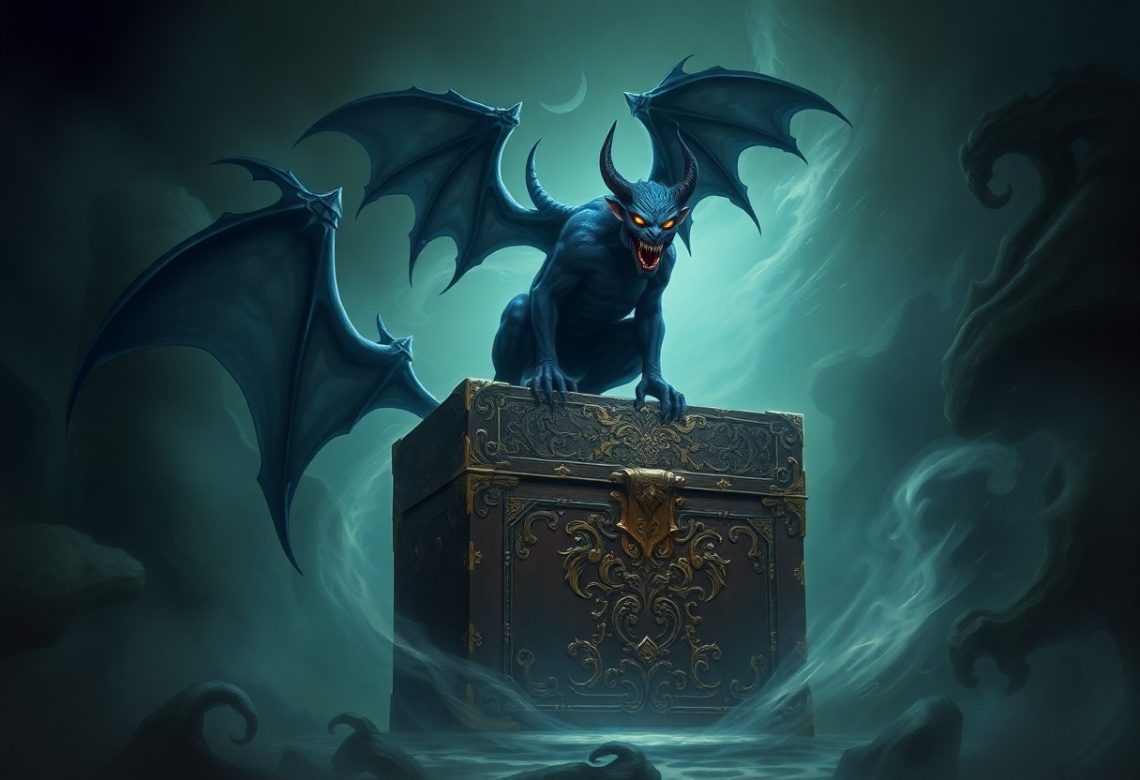
Just when you thought your dreams were a safe escape, you should be aware of Basty, the notorious nightmare demon that rides the sleeping chests of unsuspecting dreamers. This entity is not just a figment of folklore; it has its roots in various cultures and tales that highlight its terrifying ability to invade your sleep and conjure horror while you’re most vulnerable. In this post, you will explore into the origins, characteristics, and manifestations of Basty, equipping yourself with knowledge about this enigmatic being that haunts the subconscious of many.

The Origin of Basty
For centuries, tales of Basty, the nightmare demon that rides sleeping chests, have haunted folklore. He is said to be spawned from the deepest fears of restless souls, a malevolent entity that preys upon your vulnerability during the most vulnerable hours of the night. His origins shrouded in darkness, Basty embodies the very essence of fear, drawing strength from the terror he evokes in your dreams.
Folklore and Mythology
Across various cultures, Basty has woven himself into the fabric of mythology, serving as a symbol of the fears that plague humankind. Early accounts depict him as a dark figure cloaked in shadow, haunting the dreams of those who dare to sleep too soundly. Legends suggest that he was created by the anxieties of ancient civilizations, transforming the dreadful tales into warnings to be shared around the fire.
Cultural Significance
One enduring aspect of Basty’s legacy is the way he reflects your inner struggles and anxieties. Stories of this demon have inspired cautionary tales that encourage you to confront your fears. Basty serves as a reminder that nightmares can be a mirror, revealing what lies beneath your conscious mind.
In addition to being a figure of fear, Basty plays a role in cultural rituals aimed at protection during sleep. Many communities have developed practices to ward him off, ranging from specific prayers to the placement of charms under pillows. These rituals highlight your desire for security and peace, showcasing how deeply intertwined your cultural psyche is with the night terrors that haunt your dreams.
Characteristics of Basty
It is crucial to understand the unique characteristics of Basty, the nightmare demon known for riding sleeping chests. Basty embodies a blend of menacing features and sinister grace, designed to instill dread in the hearts of those whose slumber it disrupts. Its presence is often felt in the stillness of the night, striking fear into the dreamers who encounter it.
Appearance and Traits
To fully grasp Basty’s menacing presence, consider its eerie appearance. This demon is typically shrouded in a cloak of shadows, with glowing red eyes that pierce through the darkness. Long, slender limbs extend unnaturally, giving it an otherworldly aura. You may feel an overwhelming chill in the air when Basty is near, a testimony to its frigid and dark essence.
Behavioral Patterns
At the core of Basty’s nature lies a pattern of intrusive behavior, marked by relentless pursuits in the depths of your slumber. Often, it appears at the brink of your dreams, stealing your peace and peace of mind. You might experience a sensation of weight pressing on your chest, a common sign of Basty’s presence and interference in your dreams.
Basty exhibits a remarkable ability to sense your deepest fears, tailoring its nightmare experiences to maximize terror. The demon thrives on emotional turmoil, feeding off your anxiety and unease. You will notice that its visits often coincide with periods of stress in your life. This pattern serves to reinforce Basty’s sinister influence, targeting you during your most vulnerable moments, thereby ensuring its nightmarish reign persists.
Basty and Sleep Paralysis
Now, when you encounter sleep paralysis, you might feel a chilling connection to the legend of Basty, the nightmare demon that rides upon sleeping chests. During these episodes, you may find yourself awake yet unable to move, as if an unseen force is pinning you down. This experience can evoke feelings of terror and helplessness, making Basty a fitting symbol for the psychological turmoil associated with sleep paralysis.
Psychological Effects
Across various studies, sleep paralysis is linked to heightened levels of anxiety and stress. You may experience hallucinations or a sense of impending doom that can exacerbate your mental state. Basty, as a representation of these fears, can intensify the psychological effects, leaving you feeling more vulnerable during these occurrences.
Sleep Studies and Research
For those interested in understanding the mechanics of sleep paralysis, extensive research has shed light on the phenomenon. Sleep studies reveal that disruptions in REM sleep can lead to episodes where your brain is awake, but your body remains in a sleep state.
A wealth of research has focused on the connection between REM sleep disruption and sleep paralysis. Studies suggest that factors such as sleep deprivation, irregular sleep patterns, and high-stress levels may increase your chances of experiencing these terrifying episodes. By understanding these triggers, you can take proactive measures to improve your sleep hygiene and reduce the likelihood of confronting Basty during your most vulnerable moments.
Historical Interpretations
Unlike many mythical beings, Basty’s interpretations vary widely through different cultures and eras. Historically, this nightmare demon has been depicted in various forms, often reflecting the anxieties of the societies that spoke of it. In medieval texts, Basty is represented as a malevolent force, while in more modern retellings, it sometimes adopts a more ambiguous nature, embodying the fears of sleep paralysis and night terrors.
Changes Over Time
Any exploration of Basty reveals significant transformations in its portrayal. Originally viewed as a straightforward demon of nightmares, it has evolved into a complex symbol of personal fears and societal issues. This shift suggests that as cultures change, so do their interpretations of what haunts their dreams.
Comparisons with Other Entities
By examining Basty alongside similar creatures, you will notice profound connections between nightmare demons across cultures. The following table highlights these comparisons, offering insight into how different societies conceptualize these tormenting beings.
Comparative Analysis
| Entity | Cultural Significance |
|---|---|
| Basty | Nightmare demon riding sleeping people, causing fright and restlessness. |
| Incubus | A demon that lays on sleeping women, associated with sexual dreams and fear. |
| Morfeo | Greek symbol of dreams, often represents more peaceful interactions than Basty. |
Further exploration reveals that Basty shares traits with the Incubus, as both entities inspire fear during sleep. However, while the Incubus focuses on seduction, Basty’s realm is rooted in instilling horror. Both, however, reflect their respective cultures’ views on the vulnerability experienced during sleep, showcasing how nightmares transcend individual experiences and speak to shared human fears.
Deep Dive into Comparative Symbolism
| Entity | Psychological Undertones |
|---|---|
| Basty | Embodies fear of helplessness and loss of control. |
| Incubus | Conveys anxieties surrounding intimacy and vulnerability. |
| Morfeo | Represents a more positive exploration of dreams and unconscious thoughts. |
Cultural Depictions of Basty
Keep in mind that Basty’s portrayal spans various cultures, highlighting the universal fear of night terrors and the unknown. From folkloric tales to modern interpretations, Basty serves as a reminder of the darker aspects of sleep, embodying both the mythological and psychological elements of nightmares that resonate with many across generations.
Literature and Art
Against the backdrop of literature and art, Basty emerges as a haunting character. Hailing from ancient texts and folk stories, artists and writers have captured your fascination with this nightmare demon, illustrating his oppressive presence and the chilling beauty of sleep disturbances. These depictions evoke a sense of awe and dread, showcasing the complex relationship between humanity and our fears.
Basty in Modern Media
After centuries of folklore, Basty has found a new existence in modern media. Television shows, films, and video games have embraced this demon, presenting him in many captivating forms that keep audiences on edge, reminding you of the nightmares that linger just below the surface as you drift off to sleep.
It is through this modern lens that Basty captivates new generations, intertwining with contemporary storytelling techniques. You can find him in horror-themed video games that engage players in a battle against their own fears or in animated series that explore the concept of nightmares. This evolution not only reflects society’s continuing fascination with the supernatural but also reinforces the relevance of Basty as a symbol of your anxieties and the eternal struggle against the terror of sleep. Whether as a subtle reference or featured in plotlines, Basty’s presence resonates within your fear-filled imagination.
Final Words
Hence, as you investigate into the legend of Basty, the nightmare demon that rides sleeping chests, you gain insight into a fascinating myth that reflects humanity’s fears and dreams. Understanding Basty’s role in folklore allows you to appreciate the complexity of sleep and the unconscious mind, revealing how cultural narratives shape our perceptions of nightmares. By exploring this darkly intriguing character, you not only uncover a spectral tale but also enhance your grasp of the psychological underpinnings of fear that resonate within us all.


